
Jowls and marionette lines can make the lower face look heavier than it used to. This guide explains when dermal filler may help, when it has limits, and why lower-face treatment needs careful planning.

Lead Practitioner & Director, Awlin Beauty Medical Aesthetics, Maidstone
You do not usually wake up one morning with jowls.
It tends to creep in quietly.
A softer jawline in photos. A shadow beside the chin. Mouth corners that seem to sit a little lower than they used to. Makeup not sitting quite the same around the lower face.
Then one day, you notice it properly — and once you’ve seen it, it’s hard to unsee.
That’s often when people start searching for dermal fillers for jowls, filler for lower face sagging, or what can be done about sagging jowls.
The answer isn’t as simple as “yes, have filler” or “no, you need surgery”. Lower-face ageing is more awkward than that. Jowls, marionette lines, chin shape, jawline definition and skin laxity all feed into each other. Treat one part badly and the whole lower face can look heavier. Treat it well and the result can be subtle, fresh and quietly effective.
Dermal filler can help in the right situation. It can soften marionette lines, reduce shadowing, support the mouth corners and improve the way the chin and jawline frame the lower face. What it can’t do is remove loose skin or physically lift tissue in the way surgery can.
That is where the judgement comes in.
At Awlin Beauty Medical Aesthetics in Maidstone, Clare takes a nurse-led approach to lower-face filler. The consultation isn’t about picking a treatment from a menu. It’s about looking at what has changed, what can realistically be improved, and whether filler is actually the right tool.
If the lines from the mouth towards the chin are your main concern, start with our marionette lines filler in Maidstone page.
Dermal fillers can help jowls when the concern is mild to moderate and linked to lost support, shadowing or lower-face imbalance.
They’re not a facelift in a syringe.
That phrase gets thrown around far too easily in aesthetics, and it creates the wrong expectation. Filler does not pull loose skin upwards. It does not tighten the lower face. It can’t undo every structural change that happens with age.
Used carefully, though, filler can make early jowling less noticeable. It can soften the transition between the chin, mouth and jawline. It can take away some of the tired, downturned look that marionette lines create.
The key word is carefully.
Too much filler in the wrong lower-face area can make things worse. Heavier. Puffier. Less defined. That is the opposite of what most people want.
People often ask what causes jowls on the face, as though there will be one neat culprit.
There rarely is.
The lower face changes because several things are happening at once. Skin becomes less firm. Collagen levels reduce. Facial fat shifts. Bone support changes over time. The jawline loses a little of its clean edge. The chin may look less supportive than it once did. Add genetics, weight changes and natural facial movement into the mix, and you start to see why jowls can appear differently from one person to another.
For one person, jowling shows as a small pocket of heaviness beside the chin. For another, the bigger issue is a downturned mouth. For someone else, the jawline has softened but the skin itself is still fairly firm.
Those differences matter during treatment planning. Lower-face filler should not be done as a copy-and-paste treatment. The face does not work that way.
Marionette lines are the lines that run from the corners of the mouth down towards the chin. They get their name because they can look a little like the mouth lines on a marionette puppet. Not the most flattering name, I know, but that is the term people tend to use.
Marionette lines can make the mouth look slightly downturned, even when you are not upset or tired. That’s why clients often say things like:
“I feel like I look miserable, even when I’m not.”
Marionette lines can be caused by:
Dermal filler for marionette lines can help by restoring support and softening the fold, but the treatment plan depends on the face in front of us.
For some clients, marionette filler alone may be enough. For others, better results may come from also supporting the chin, jawline or surrounding lower-face structure.
Jowls and marionette lines often show up around the same time because they are both linked to changes in the lower face.
As support reduces, the area around the mouth, chin and jawline can start to look heavier. The corners of the mouth may look pulled down, the jawline may look softer, and shadows may form beside the chin.
This is why people often search for things like:
They’re usually trying to solve one bigger concern: the lower face looks less lifted, less defined or less fresh than it used to.
The important part is working out what is causing it.
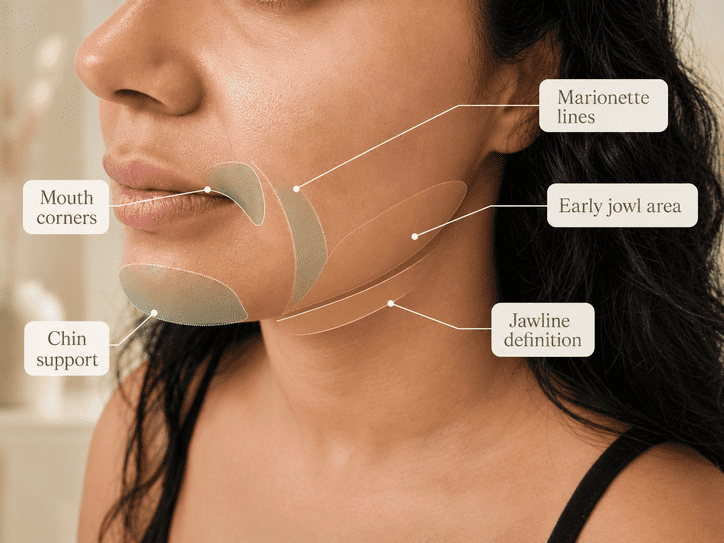
Yes, but with limits.
For early jowling, filler may help soften the appearance of the lower face by improving support around nearby structures. That might mean treating marionette lines. It might mean adding a little support to the chin. It might mean considering jawline definition. It might mean doing less than you expected.
That last option is underrated.
People often assume more product means a better result. Around the lower face, that thinking can go wrong quickly. If an area already looks heavy, adding volume carelessly can make it look heavier still.
The most natural lower-face results usually come from small, strategic adjustments. Not filling every hollow. Not chasing every line. Not trying to drag the face upwards with product.
Filler can make jowls less noticeable when the face is suitable for it. It should not be sold as a cure for sagging.
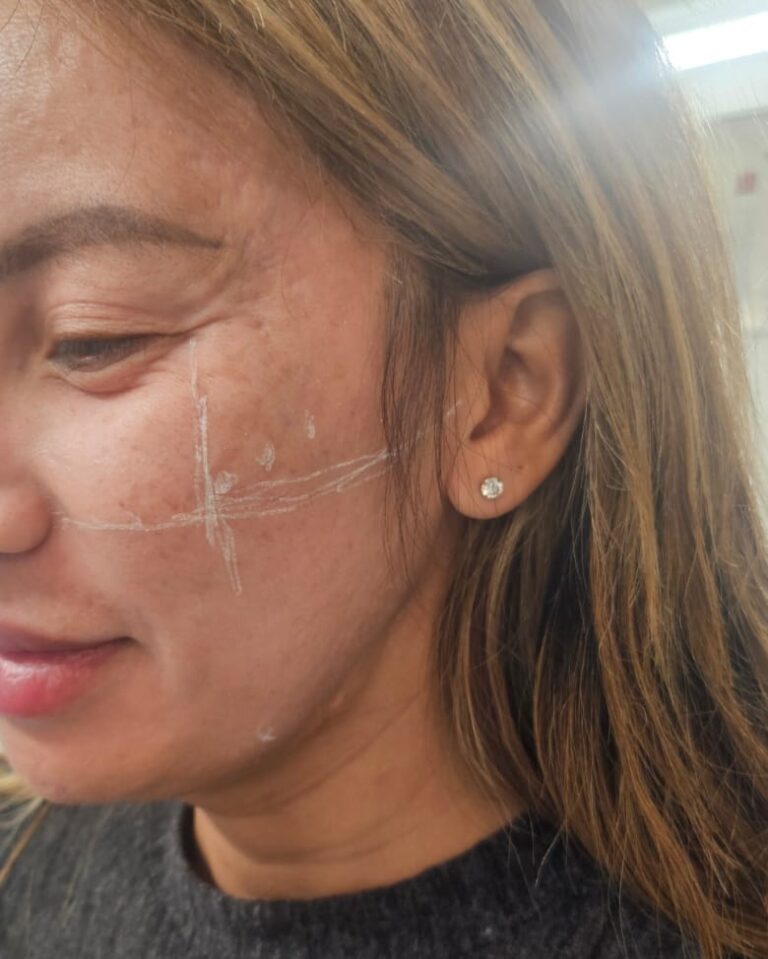
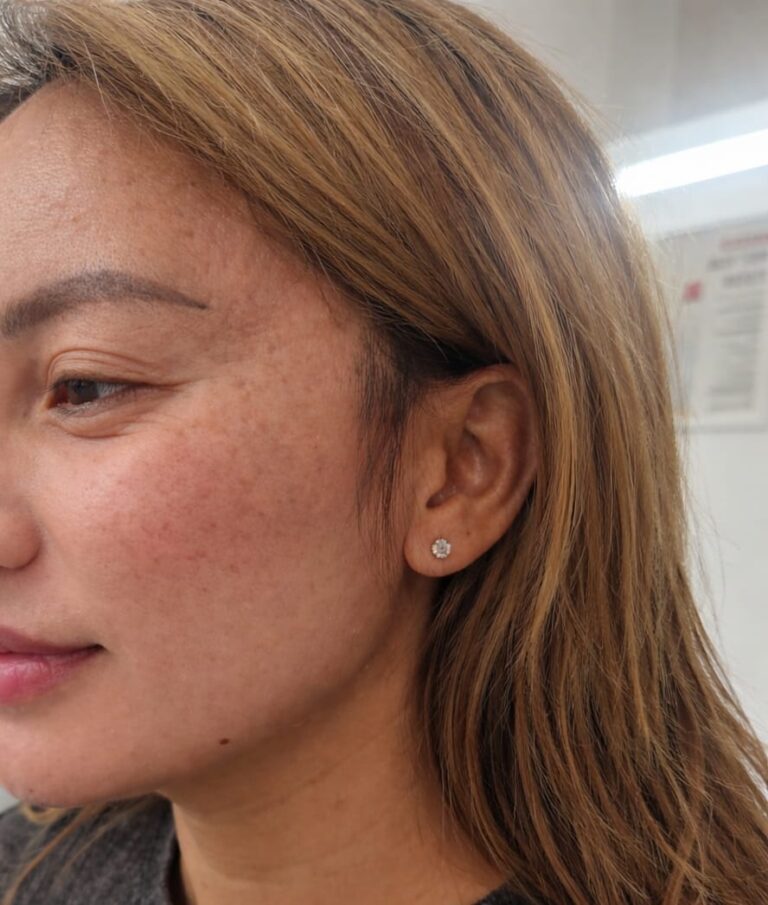
This is where treatment planning becomes more interesting.
If the heaviness is beside the chin, it feels obvious to treat that exact spot. If there’s a fold, fill the fold. If the jawline is soft, sharpen the jawline.
Faces are rarely that obedient.
A jowl can look worse because the chin lacks projection. A marionette line can deepen because the mouth corner has lost support. A jawline can look softer because the lower face has lost structure in more than one place.
So the treatment area isn’t always the same as the area you’re worried about.
That’s why I may assess the chin, jawline and marionette area together before deciding what to treat first.
It’s not about selling more treatments. It’s about avoiding a result that looks patchy or overfilled.
If jawline structure is part of the concern, jawline filler in Maidstone may be discussed as part of a lower-face plan.
It depends what is causing the sagging.
If the issue is mainly loose skin, filler has limited value. It may even be the wrong choice.
Adding volume to a lower face that already looks heavy can make the problem more obvious.
If the concern is softer support, mild jowling, marionette folds or shadowing around the chin, filler for lower face sagging may be helpful.
That’s the difference between treating structure and simply adding volume.
A proper assessment should separate those two things. Otherwise you end up treating every lower-face concern as if it needs more filler, which is how people start to look overdone.
When people search how to make jowls less noticeable, they are often hoping for one clear fix.
In reality, the answer depends on what is creating the shadow or heaviness.
A deep marionette fold can make the lower face look dragged down. A weaker chin can make the jawline look less supported, and a soft jawline can make early jowling stand out more.
Skin laxity brings its own set of limits.
This is why a lower-face filler consultation should feel thorough. You shouldn’t be rushed straight into treatment because you pointed at one area.
For the right face, softening marionette lines, supporting the chin or refining the jawline can make jowls look less obvious. The change should look like better balance, not obvious filler.
The problem is the word “lift”.
Dermal filler can support and contour, soften shadows and improve proportions. It can help the lower face look less tired in the right person.
It does not physically lift loose tissue.
Now, that doesn’t make filler pointless. It just means the language needs to be honest.
A “non-surgical jowl lift” sounds dramatic, but a more accurate description would be lower-face support or lower-face balancing.
Less flashy. More truthful.
And really, truth ages better than hype.
There’s no universal best procedure for sagging jowls.
The right treatment depends on the face, the skin, the structure underneath and the result you are hoping for.
That’s why old search terms like “best procedure for sagging jowls 2020” aren’t really that useful. The best treatment isn’t decided by a search result from years ago. Times have changed a lot since then.
It’s decided by assessment.
A good practitioner should be able to say, “This could help,” but also, “This will not give you the result you want.”
That honesty saves people money, disappointment and bad filler.
If the main concern is the fold from the mouth corner down towards the chin, marionette filler may be the most sensible place to start.
This area can change the whole expression of the face. Deeper folds in this area can make the mouth look downturned, even when your mood is not. It can also create a shadow that makes the jowl area look more pronounced.
A little support can make a noticeable difference, but only when it’s placed well.
The goal is not to erase every line around the mouth. A face with no movement and no softness does not look younger; it looks treated.
The better result is usually quieter. The fold is softened. The mouth looks less downturned. The lower face feels less heavy.
That’s the key.
The chin does more work than people realise.
A slightly under-supported chin can make the lower face look softer. It can affect the profile, the mouth area and the way the jawline appears from the front. The jawline has a similar influence. When that frame softens, jowling can look more obvious.
Of course, this doesn’t mean everyone needs chin filler or jawline filler. In fact, many people don’t.
It means those areas should be assessed before deciding that marionette filler alone will solve the problem.
For certain faces, a small amount of chin support can improve the way the lower face sits together. For others, jawline filler may help restore definition. In other cases, treating these areas would be unnecessary.
The skill is in knowing which face you are looking at.
If chin structure is part of the concern, I may discuss whether chin filler in Maidstone could help support the lower-face profile better.
Dermal fillers for jowls tend to work best when the concern is mild to moderate and the lower face still has enough structure to support a good result.
That might be someone who has started to notice a softer jawline, deeper marionette lines or a small shadow beside the chin. The face has changed, but it has not reached the point where filler would be trying to do the job of surgery.
The least suitable cases are usually where there’s significant loose skin, a heavy lower face or an expectation of a dramatic lift. Filler can’t tighten skin, and pretending otherwise helps nobody.
There’s also a judgement call around volume. A face that already looks heavy does not always need more product. It may need less intervention, better placement or a completely different approach.
This is where consultation earns its keep.
A good consultation shouldn’t feel like placing an order.
You might arrive asking for filler for jowls, but the assessment may show that the marionette lines are the bigger concern.
Or the chin.
Or the jawline.
Or skin laxity.
It may also show that filler is not the right answer.
I’ll look at the lower face as a whole: mouth corners, chin, jawline, facial movement, symmetry, skin quality and previous treatment history.
We’ll talk through what bothers you, what kind of change you would feel comfortable with, and what is realistic.
That word — realistic — does a lot of heavy lifting in aesthetics.
A treatment plan shouldn’t be built around wishful thinking or a photo of a celebrity. It should be built around your actual face.
Yes. This part I cant stress enough.
Not because filler is bad, but because lower-face filler is easy to overdo.
Too much product in the wrong place can widen the lower face, add heaviness or make the jawline look less defined. Treating the visible fold without understanding the structure around it can also give a disappointing result.
This is one of those areas where restraint is not boring. It’s sensible.
A small, well-placed amount of filler can be far more flattering than a heavy-handed attempt to fill every crease.
Lower-face filler is temporary.
How long it lasts depends on the product used, the area treated, your metabolism, facial movement and how your body breaks filler down over time. Results tend to soften gradually rather than disappear overnight.
Longevity matters, but it should not be the main selling point. A filler that lasts ages but looks bulky is not the one.
The better choice is a product and plan that suits the area, moves naturally and settles well. Maintenance can be discussed during consultation once i’ve has assessed what you need.
Most people return to normal daily life after dermal filler treatment, but the area still needs time to settle.
Swelling, tenderness, redness, bruising or firmness can happen, just like any other filler treatment. The lower face moves a lot, so it can feel noticeable for a few days after treatment. That does not automatically mean something is wrong.
You will be given aftercare advice so you know what to expect and when to contact the clinic.
If pain feels unusual, swelling worsens, skin colour changes, or something simply does not feel right, it should be checked.
Do not sit at home worrying. Just ask.
Awlin Beauty Medical Aesthetics is a nurse-led clinic in Maidstone, Kent.
My approach to lower-face filler is careful, honest and natural-looking.
That’s important with jowls and marionette lines because this area can look overdone quickly when too much filler is used or the wrong structure is treated.
The consultation includes a full medical history, facial assessment, treatment planning and aftercare advice.
More than that, it includes a proper conversation about whether filler can realistically help.
You should leave understanding the plan, the limits and the reason behind the recommendation, and excited.
Your appointment is carried out by myself, Clare, a medical professional. My years of experience in many different medical settings support my careful and clinically grounded approach to aesthetics.
If treatment isn't needed, you'll be told that clearly. I wont pretend it is just for the sake of a quick quid. Your happiness and safety is worth more to me.
The aim is not to chase trends or overcorrect. It's to restore balance, support your natural features and help you feel comfortable and confident when you look in the mirror.
Whatever concerns you have, i'll help you plan it properly rather, than rushing into another treatment too quickly.
Dermal fillers can help jowls and marionette lines, but they need to be used with judgement.
Early lower-face softening, marionette shadows, downturned mouth corners and mild jowling may respond well to carefully planned filler.
Significant loose skin or heavier sagging may need a different route.
The best lower-face work does not scream filler. It just makes the face look a little less tired, a little better supported, a little more like itself again.
If you are based in Maidstone or Kent and wondering what can be done about sagging jowls, marionette lines or lower-face heaviness, Clare can assess the area and talk you through what is realistic.
Start with our marionette lines filler in Maidstone page, or explore jawline filler and chin filler if your concern is more about structure and lower-face definition.
FAQ
They can help early jowling when the issue is linked to lost support, marionette folds, shadowing or lower-face imbalance. They can’t remove loose skin or lift the face like surgery.
Not exactly. The phrase “jowls dermal fillers” is something people search when they are worried about lower-face heaviness, but the treatment plan may involve marionette lines, chin support, jawline definition or a combination of areas.
No. Filler can’t replace surgery where there’s significant sagging or loose skin. It may help soften early jowling in the right person, but it has limits.
It depends on the cause. Non-surgical options may include marionette filler, chin filler, jawline filler or lower-face balancing. If skin laxity is the main issue, filler may not be the best option.
Start by finding out what is making them noticeable. It could be marionette folds, chin support, jawline definition, shadowing or skin laxity. Once the cause is clear, the treatment plan becomes much easier to judge.
Fillers for lower face sagging may help where the concern is mild and linked to lost support. They are less suitable when the lower face is already heavy or there’s significant loose skin.
Jowls can develop through ageing, collagen loss, skin laxity, changes in facial fat pads, reduced jawline definition, genetics and weight changes.
Yes, marionette filler can help support the area around the mouth corners and soften the fold running towards the chin, provided the concern is suitable for filler.
It depends what you expect from the word “lift”. Filler can support and contour the lower face in the right person, but it does not physically lift tissue like surgery.
Yes. Awlin Beauty Medical Aesthetics offers consultations for nasolabial fold filler, marionette line filler and lower-face dermal filler treatments in Maidstone. Treatment is only recommended after assessment to make sure it is suitable for you.
Treatment
Read more about what we offer in our jawline filler appointments.