
Confused by smile lines, nose-to-mouth folds or mouth-to-chin lines? Clare explains the difference and when dermal filler may help soften lower face changes naturally.

Lead Practitioner & Director, Awlin Beauty Medical Aesthetics, Maidstone
Lines around the mouth can be really frustrating, mainly because most people notice them before they actually know what they are called.
You might look in the mirror and think your face looks more tired than it used to. Or that the lower part of your face has started to look a bit heavier. Maybe makeup is sitting in the lines, or you keep noticing shadows around your mouth in photos.
Then you start searching and suddenly you’re hit with words like nasolabial folds, marionette lines, smile lines, lower-face filler and facial balancing.
Helpful? Not really.
So let’s keep it simple.
Nasolabial folds and marionette lines are both lines around the mouth, but they are not the same thing. They appear in different areas, can be caused by slightly different changes in the face, and may need different treatment plans.
At Awlin Beauty Medical Aesthetics in Maidstone, I always start by assessing the face properly before suggesting treatment. That matters, because the answer is not always “put filler directly into the line”. Sometimes that helps. Sometimes it does not. Sometimes the better result comes from supporting the surrounding areas first.
And sometimes, the honest answer is that treatment is not right for you yet.
That is what a proper consultation is for.
Nasolabial folds are the lines that run from the sides of the nose down towards the corners of the mouth.
Marionette lines are the lines that run from the corners of the mouth down towards the chin.
Both can become more noticeable with age, facial movement, skin changes and volume loss.
Dermal filler may help soften these areas, but the right plan depends on your face, not just the line itself.
Treating the crease directly is not always the best option.
Cheek, mid-face or lower-face support may sometimes be considered as part of a more balanced plan.
Nasolabial folds are the lines that run from the side of the nose down towards the corners of the mouth. A lot of people call them smile lines or nose-to-mouth lines.
Everyone has them to some degree and they’re completely normal. They appear when we smile, talk and move our face. The problem is not that they exist; the problem is usually when they start to look deeper, heavier or more noticeable at rest.
You may notice:
This doesn’t mean your face has suddenly “dropped overnight”. It usually happens gradually.
As we age, the face changes. Skin loses some firmness, facial fat pads shift, and the support from the mid-face can reduce. When that happens, the area around the nose and mouth can look heavier, even if your skin itself is still in good condition.
That’is why nasolabial folds are not always just a “line problem”.
Sometimes they are a support problem.
Marionette lines are the lines that run from the corners of the mouth down towards the chin. They get their name because they can look a little like the mouth lines on a marionette puppet. Not the most flattering name, I know, but that is the term people tend to use.
Marionette lines can make the mouth look slightly downturned, even when you are not upset or tired. That’s why clients often say things like:
“I feel like I look miserable, even when I’m not.”
That’s a very common concern. You may notice:
Again, this doesn’t mean there is anything wrong with your face. It just means the lower face may have started to lose some structure or support.
Marionette lines can be affected by facial movement, skin quality, natural anatomy, volume changes and the way the lower face is supported.
So, just like nasolabial folds, they need proper assessment before deciding what treatment makes sense.
Common name
Smile lines / nose-to-mouth lines
Mouth-to-chin lines
Location
From the sides of the nose to the corners of the mouth
From the corners of the mouth, lower face heaviness, sad or tired expression
Main concern
Mid face heaviness, deeper smile lines, shadowing
Downturned mouth, lower face heaviness, sad or tired expression
Often linked with
Cheek support, mid face volume changes, skin ageing
Lower face support, mouth corners, chin/jawline balance
Treatment approach
May involve direct softening or supporting nearby areas
May involve direct support, mouth corner support or lower face balancing
Best assessed by
Looking at the whole mid face and lower face
Looking at the mouth, chin, jawline and lower face structure
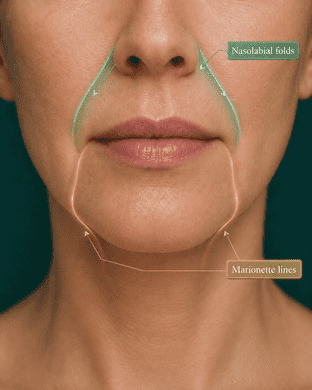
The important point is this:
They are close together, but they are not the same concern.
That matters because treating the wrong area can give a result that looks unnatural or does not actually improve the thing that bothers you.
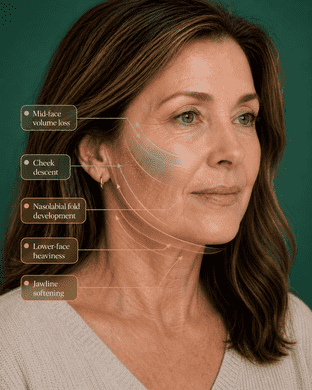
Most people want a simple answer here, but the truth is that lines around the mouth are usually caused by a few things happening together. Research into facial ageing shows that changes in facial fat, bone support and skin quality can all contribute to visible changes in facial structure over time.
The most common reasons include:
Natural facial movement
We use the mouth area constantly. Talking, smiling, eating, laughing and expressing ourselves all involve movement around the mouth.
Over time, repeated movement can make certain lines more noticeable.
That doesn’t mean you should stop smiling. Please don’t do that, the world needs more smiles, not less. It just means the mouth area works hard, so it is one of the places where changes can show.
Loss of facial volume
As the face changes with age, some areas lose support. The mid-face and lower face can start to look softer or flatter.
When support reduces, folds around the nose, mouth and chin can look more obvious.
This is why I don’t only look at the line itself, but at what is creating the line.
Skin quality changes
Skin can become thinner, drier or less firm over time. This can make creases and shadows look more noticeable.
In some cases, skin boosters or skin quality treatments may be worth discussing alongside or instead of filler, depending on what’s actually bothering you.
Facial structure
Some people naturally have deeper folds or stronger shadows around the mouth, even when they are younger.
That does not automatically qualify them for treatment. It just means their anatomy naturally creates more definition in that area.
Weight changes
Weight loss, weight gain or changes in facial fat distribution can affect the way the lower face looks.
This can sometimes make nasolabial folds or marionette lines more visible.
Previous treatment choices
Sometimes previous filler placed elsewhere can affect the way the face looks as a whole. Too much volume in one area, or filler placed without considering facial balance, can sometimes make other areas look less harmonious.
This is why treatment planning matters.
A good result is not about chasing every line. It is about understanding the face properly.
Yes, dermal filler may help in some cases, but it depends on issue causing the concern.
Dermal filler can be used to support, soften and improve the appearance of certain folds or lines. The aim isn’t to make the face look frozen, puffy or completely line-free. The aim is usually to restore a bit of support and create a softer, fresher look.
For nasolabial folds, filler may be considered to soften the crease or support the surrounding area.
For marionette lines, filler may be considered to support the corners of the mouth, soften the mouth-to-chin line, or improve lower-face balance.
But here is the part I really want people to understand: More filler is not always the answer.
If a fold is caused by the heaviness above it, just filling the line can sometimes make the area look bulky. If the lower face has lost structure, treating only the crease may not give the improvement you hoped for.
This is why I don’t like the “point and fill” approach.
You shouldn’t have to diagnose yourself before booking. You should be able to say, “this area bothers me”, and then have your face assessed properly.
That is the safer way to plan treatment.
This is one of the biggest misunderstandings with lower-face filler because people often think:
“I have a line here, so the filler needs to go here.”
Sometimes, yeah that’s true, but not 100% of the time.
A crease can be the result of changes happening around it, above it or below it. If we only treat the visible line, we might miss the reason it’s there in the first place.
For example, if the cheek area has lost support, the nasolabial fold may look deeper. In this scenario, putting filler straight into the fold might help a little, but it may not be the most balanced plan.
Equally, if marionette lines are linked with lower-face heaviness, mouth corner support or chin/jawline structure should also be considered.
This doesn’t mean everyone needs multiple treatments. Absolutely not. It means the treatment plan should make sense.
At Awlin Beauty, I’d rather tell you that a smaller, more thoughtful plan is better than just filling the area you pointed at and hoping for the best.
Your face deserves more care than that.
Nasolabial fold filler may be suitable when the nose-to-mouth lines are deeper, more shadowed or creating a tired appearance around the mid-face. Treatment may help soften the fold and reduce the appearance of heaviness in that area, but the end result should still look like you.
The aim is not to completely erase every line. A face with no movement, no softness and no natural folds can start to look odd very quickly. No one wants to look like they are AI generated.
Good filler should be subtle enough that people notice you look fresher, not that you have obviously “had something done”.
During consultation, I would look at:
Only then, we can decide whether nasolabial fold filler is the right option or whether a different plan would give a better result.
Marionette line filler may be considered when the lines from the mouth corners towards the chin are making the lower face look tired, sad or heavier than you feel.
It’s often less about looking “younger” and more about looking less pulled down. That might sound like a small difference, but it matters.
Clients dont normally turn up saying, “I want to look 21 again.” They usually say:
“I just don’t want to look so tired.”
“I feel like my mouth has started turning down.”
“I look miserable in photos and I’m not.”
That is where lower-face assessment can help.
Marionette line treatment may involve softening the lines themselves, supporting the corners of the mouth, or considering the surrounding lower-face structure.
Again, this needs to be done carefully.
Too much filler around the mouth can look heavy and poorly planned treatment can make the lower face look bulky rather than fresher. The best results usually come from a conservative, balanced approach.
Perioral lines are slightly different again.
These are the fine lines that appear around the mouth, often above the upper lip. Some people call them smoker’s lines, although you absolutely do not need to have smoked to have them.
They can be caused by facial movement, ageing, skin quality changes, genetics and volume loss around the lip area.
Perioral lines are usually finer and more skin-focused than nasolabial folds or marionette lines. Sometimes dermal filler may help, but the treatment needs to be very careful because this area can quickly look unnatural if overtreated.
The aim of this treatment is softening and support, not making the upper lip area look puffy.
If your concern is fine lines around the lips rather than deeper folds around the mouth, then perioral line treatment may be more relevant.
You do not need to know, and thats the beauty of a consultation with me. You shouldn’t have to sit at home trying to work out whether you have nasolabial folds, marionette lines, perioral lines, cheek volume loss, skin laxity or lower-face heaviness.
That is too much pressure, and honestly, it is not your job. If your car breaks down you dont get under the bonnet and diagnose the exact problem (unless you have the technical skill), you call a mechanic.
Your job is to tell me what bothers you – My job is to assess the area properly and explain what I can see.
Sometimes the answer is simple. Sometimes it is not. But the best plan is normally one treatment. It could be administered in a staged approach, or I may advise you to start smaller than you expected.
And yes, sometimes I may tell you that I do not think treatment is the right option.
That might not be the most exciting answer, but it is the honest one.
To be honest, Either can.
Nasolabial folds can make the mid face look heavier or more shadowed.
Marionette lines can make the mouth look downturned or the lower face look sadder.
But it is not always about one line. It is about how the face looks on the whole.
For example, someone with mild nasolabial folds but strong marionette shadows may feel their lower face looks tired. Someone else may have very little marionette change but deeper nose-to-mouth folds that make the mid face look heavier.
This explains why each treatment plan should be personalised. Copying someone else’s treatment plan rarely works.
Two people can have the same concern written down on paper, but completely different facial anatomy.
The right treatment is the one that suits your face.
Usually, that shouldn’t be the goal.
I understand that clients often want lines gone completely, but faces are meant to move. If every natural fold is removed, the result can look strange or overfilled.
With nasolabial folds and marionette lines, the aim is usually to soften, support and improve the overall look of the area.
A good result should still look natural when you smile, talk and move your face.
If someone promises to erase every line completely, I would be cautious. That kind of promise is not realistic, and it can lead to overtreatment.
At Awlin Beauty, I would rather under-promise and be honest than sell you a fantasy that doesn’t match how facial anatomy actually works.
Dermal filler is commonly used in aesthetic medicine, but it still needs to be treated seriously.
The lower face has important blood vessels, movement patterns and structural considerations. The lower face isn’t an area where treatment should be rushed or treated like a quick beauty add-on.
Possible side effects can include:
Rare but more serious complications can also occur, which is why it’s important to choose a practitioner who understands anatomy, risk, aftercare and when not to treat.
Before any treatment, I’ll discuss your medical history, previous treatments, expectations and suitability. Dermal fillers are medical aesthetic treatments, so it is important to understand the possible risks, aftercare and suitability before going ahead.
If something does not feel appropriate, I will say so. That is not me being difficult. That is me doing my job properly.
View the Clinical Standards that I adhere to.
Clients often use these terms as if they mean the same thing, but they are slightly different.
Lip filler dissolving means breaking down unwanted hyaluronic acid filler. Lip filler correction is the longer term plan: dissolving, waiting, reviewing, refilling later, or changing the way future lip filler is placed.
For example, if you have migrated filler, the correction plan may involve dissolving the migrated area first, allowing the lips to settle, then considering a more natural refill later.
If you have a small lump, the plan may be more targeted. If your lips are simply overfilled, the plan may involve a fuller reset. My point is this: dissolving is one tool. The real value is in knowing when to use it.
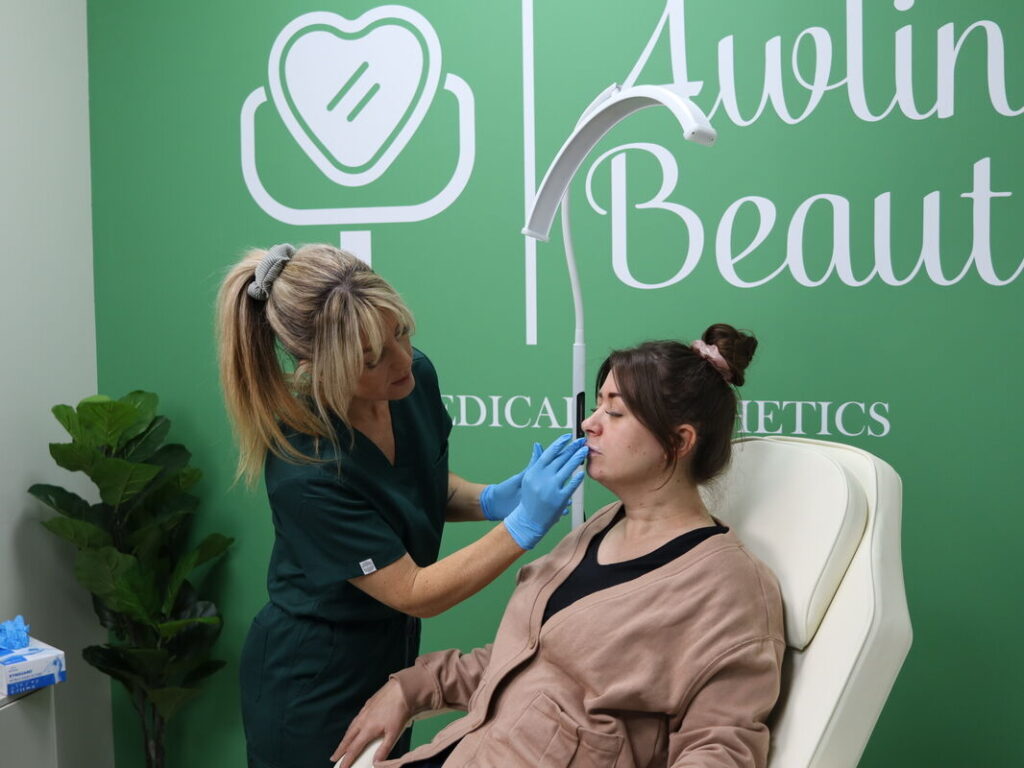
Every treatment starts with a consultation. I’ll listen to your concerns, assess the areas in question, and understand how to work with your facial anatomy.
For nasolabial folds and marionette lines, that may include assessing your:
I’ll ask what kind of result you are hoping for, and whether you have had any previous aesthetic treatments.
Please do not worry if you don’t know exactly what you have had before. Lots of people can’t remember everything. It just helps if you can share anything you remember, such as when you had treatment, where it was placed, or whether you had any issues afterwards.
From there, I will explain what I can see and what options may be suitable which may include:
The plan should make sense for your face, not just for the treatment menu.
Your appointment is carried out by myself, Clare, a medical professional. My years of experience in many different medical settings support my careful and clinically grounded approach to aesthetics.
If treatment isn't needed, you'll be told that clearly. I wont pretend it is just for the sake of a quick quid. Your happiness and safety is worth more to me.
The aim is not to chase trends or overcorrect. It's to restore balance, support your natural features and help you feel comfortable and confident when you look in the mirror.
Whatever concerns you have, i'll help you plan it properly rather, than rushing into another treatment too quickly.
Sometimes, yes its possible, but not always.
It depends on your assessment, the amount of correction needed, your treatment history and how conservative we need to be.
For some clients, treating both areas together may make sense because the concerns are connected. For others, it may be better to start with one area, review the result, and decide whether anything else is needed later. I know staged treatment can feel slower, especially when you want the result now.
But slower is not always a bad thing.
A staged plan can help avoid overfilling, reduce the risk of a heavy result, and give us chance to assess how your face responds. Sometimes the best aesthetic work is the work that knows when to stop.
This depends completely on your face.
I know that is not the neat answer people want, but it is the truthful one. The amount needed can vary depending on:
Using more filler does not automatically mean a better result.
In fact, using too much can create heaviness, puffiness or an overfilled look, especially around the mouth. The aim is to use the right amount in the right place as that’s what gives a softer, more natural result.
View our list of Dermal Filler Treatments in Maidstone.
Dermal filler results vary from person to person, and the longevity of results is based on the area treated, the type of filler used, your metabolism, your lifestyle, your facial movement and how your body responds.
Lower face filler is not permanent. Over time, the product gradually breaks down and the area may slowly return closer to how it looked before. Some clients choose to maintain results with review appointments, while others prefer to wait longer between treatments. During your consultation, I can talk you through what is realistic for your treatment plan.
The key word there is realistic.
I would rather you understand what filler can and cannot do before deciding.
You may want to book a consultation if:
If you are unsure, book a consultation and we can work it out properly.
It’s much safer than guessing.
The honest answer is that most people don’t need to obsess over the name of the line.
Yes, it helps to understand the difference, but what matters more is why the line is there, how it affects your face, and whether treatment would genuinely help.
Nasolabial folds are usually the nose-to-mouth lines.
Marionette lines are usually the mouth-to-chin lines.
Perioral lines are usually the finer lines around the lips.
But faces are not diagrams. These areas all sit close together, and they often affect each other. That’s why a proper facial assessment is so important.
At Awlin Beauty Medical Aesthetics in Maidstone, my aim is not to make you look different. It is to help you understand what’s happening, find out what your options are, and what would give the most natural-looking result for you.
That could mean adding filler, creating a different plan or doing less than you expected.
And sometimes, doing less is exactly what gives the best result.
If you are noticing deeper smile lines, mouth-to-chin lines, a downturned mouth or general heaviness around the lower face, the best first step is a proper consultation.
At Awlin Beauty Medical Aesthetics in Maidstone, I can assess your face, explain whether your concern is more likely to be nasolabial folds, marionette lines, perioral lines or general lower-face support, and talk you through what may be suitable.
You do not need to arrive knowing the answer – that ‘s what I’m here for.
Book a consultation with myself, Clare, to discuss lower-face filler options in Maidstone.
FAQ
Nasolabial folds run from the sides of the nose down towards the corners of the mouth. Marionette lines run from the corners of the mouth down towards the chin. They are both lines around the mouth, but they sit in different areas and may need different treatment approaches.
Yes, nasolabial folds are often called smile lines or nose-to-mouth lines. Everyone has them to some degree, especially when smiling. They usually become a concern when they look deeper or more noticeable while the face is at rest.
Marionette lines can create shadows from the corners of the mouth down towards the chin. This can make the mouth look slightly downturned, even when you are not sad or tired. Treatment may help soften the area, but the lower face needs to be assessed properly first.
The aim should usually be to soften nasolabial folds, not erase them completely. Completely removing every natural fold can look unnatural. A good result should support the area while still allowing the face to move and look like you.
Yes, dermal filler may help soften marionette lines in suitable clients. Treatment may involve supporting the line itself, the mouth corners or the surrounding lower-face area. The right approach depends on your facial anatomy and the cause of the concern.
Sometimes cheek support may be considered before treating nasolabial folds directly, especially if the mid-face has lost support. This is not needed for everyone. A consultation helps decide whether cheek support, direct fold treatment or another approach is best.
You may feel some discomfort, pressure or tenderness during treatment, but this varies from person to person. Clare will talk you through what to expect and provide aftercare advice after your appointment.
You do not need to know before booking. If you are unsure whether your concern is nasolabial folds, marionette lines, perioral lines or general lower-face heaviness, book a consultation. Clare can assess your face and explain your options clearly.
Dermal filler should always be treated as a clinical procedure, not a casual beauty treatment. The mouth and lower-face area require careful assessment, safe technique and clear aftercare advice. Suitability, risks and expectations should always be discussed before treatment.
Yes. Awlin Beauty Medical Aesthetics offers consultations for nasolabial fold filler, marionette line filler and lower-face dermal filler treatments in Maidstone. Treatment is only recommended after assessment to make sure it is suitable for you.
Information
We outline our safety, medical assessment and professional practice non negotiables for your benefit.